Friday, September 21, 2007

Self-righteous pundits love anything with a "-gate" at the end


Think he'd give this up for a little reputation repair? Nope.


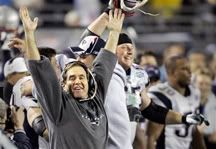
With all of this Bill Belichick business finally starting to settle down, most of the national pundits are finishing up their self-righteous rants about cheating and dishonesty.

As you've seen with many controversial subjects on this blog, my stance is usually a bit divergent from the media consensus about incidents.

When someone commits a wrong in sports, national columnists and pundits across the country can't jump to their keyboards fast enough to denounce the evil doer. If there is a juicy story out there, you can bet that anyone with a platform will try and one-up one another in an effort to strong-arm their way into the discussion. Sometimes it seems like some columnists are running for the President of Sports with one strong platform: "I'm tougher on crime than my opponents."

Given, what Belichick did deserves punishment. He broke specific rules concerning the monitoring of another team. What all of these self-righteous yahoos fail to recognize is that what Bill Belichick helped his team gain a distinct advantage that absolutely earned him and his franchise far more than the fines and penalties they incurred. Depending on who you talk to, he's been doing this for some time. If so, he was able to get away with something most teams dream of being able to pull off. He successfully stole the other team's advantage. And in the end, he is only accountable to himself and his franchise. The NFL can impose penalties until they are blue in the face, but until those penalties outweigh the gains derived from the infractions, they'll be useless. If you asked Patriots owner Robert Kraft if he would take a paltry fine and the loss of a draft pick for three Super Bowl championships and a position as a premier NFL franchise...well, you see the obvious answer here.

Other writers have made other logically faulty arguments defending Belichick's actions as just and simply of a competitive nature. These are not accurate either. Stealing signs in baseball has always been the norm, but nobody has been outed for using extra means to attain them, i.e. electronic means. You can bet it's been done though. They've just been too sneaky to get caught. Now that this business about Belichick has come about, the likelihood that anyone will will be caught in the future is slim. There are plenty of ways to survey another team without having a cameraman blatantly standing on the sidelines.

Stealing another team's advantage has been around since sports began. It will continue to be prevalent, even if the perpetrators go uncovered.

Reasonably yours,
Scooter

E-mail us

Friday, September 14, 2007

Will tiered pricing price you out?


What happens when Greg Oden isn't there to justify the Portland price hike? (Credit: RM)


I don’t have an economics degree (that’s Travis), but anybody would agree that tickets to certain games are in higher demand than others. Obviously, you have your Super Bowl or Final Four tickets, but what about individual games during the season for your favorite franchise?

It’s arguable that NBA fans would pay more to see LeBron James rather than Antoine Walker, but this week has brought a new test to the theory.

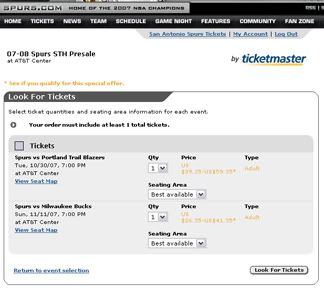
For season ticket holders of the San Antonio Spurs, individual game tickets went on sale this week and there was a noticeable bump on the prices of some games. Fans with the option to buy now are reporting the season-opener against Portland, as well as games against conference rival Phoenix and intra-state rivals Dallas and Houston are higher than most other games.

A supposed Spurs season-ticket holder said prices were increasing about 50-100 percent for the aforementioned games. That’s interesting.

A look at the seating chart and pricing (warning: PDF) for the AT&T Center reads "Tiered pricing will be in effect for select games."

I believe people will pay more for better games with arguably better players. The initial reaction around the Spurs message boards when Thursday’s news of the injury to Greg Oden and the ticket pricing was discovered was that the price for the Trail Blazers game might drop. That’s not going to happen considering it’s also expected to be the night when the Spurs receive their championship rings.

But think for a second if the game were scheduled a week later – would the pricing have to drop some with Oden missing the game? The casual NBA fan might not be so apt to shell out a little more money for the game while a deeper fan would recognize the Blazers have a solid, young core of players in Brandon Roy, LaMarcus Aldridge, Sergio Rodriguez and Raef LaFrentz (okay, you can stop laughing at the last one) that should be very entertaining to watch develop into a championship contender once their man in the middle returns.

What happens if Dirk Nowitzki goes down with an injury a month before Spurs vs. Mavs? Do the Spurs drop prices on tickets and risk an iPhone-like backlash or do they run the risk of not selling out the arena for what would still likely be a nationally-televised game?

The Spurs dealt with an embarrassing ticket situation following the Western Conference Semifinals against Phoenix last season. Following the emotional exhaustion of the victory over the Suns, there was such a quick turnaround – late Friday to midday Sunday/Father’s Day – to the matchup against the Utah Jazz in Game 1 of the Western Conference Finals, that the game didn’t come relatively close to a sellout (officially more than 450, but eyewitness accounts bump that number a little higher).

On the flip side, would teams reduce prices for games that might not sell? Doubtful. First, if your team is successful at bringing in fans at your pre-determined price, why drop the price and lose profits? People are already paying the set price and I don’t see a backlash coming unless your team flat out sucks and ownership fails to try and pour money back into the franchise to rebuild (see: Pirates, Pittsburgh; Lions, Detroit).

But as the NBA has seen its marketing go time and again (and as Scooter has pointed out) with the focus on individuals versus teams, the time when ticket prices rise for a game against a great team with less marketable (for whatever reason) stars will not come soon enough.

Granted, this is nothing new and MLB is approaching record attendance numbers (most on the high side and a few on the low side). The other factors will come into play, too, such as overall ticket pricing, local market economy, total costs of attendance, etc.

So the question finally arises: At what price point will you pay to see your favorite team play against a stellar rival versus one against an also-ran? Would you also demand to pay less for the lesser teams?


Joe

E-mail us
Joe is a guest contributor to laissez-faire ball.

Not a lot of fish in the sea


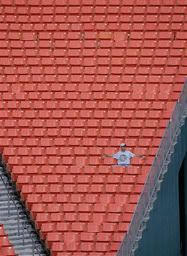
So lonely...


Have you ever gone to a baseball game and tried to sneak into better seating than you purchased? If so, then Wednesday’s Nationals-Marlins game appears as if it wouldn’t have been much of a challenge.

According to published reports, there were around 400 people in the stands at Dolphins Stadium at the start of the game even though the paid attendance number floating around is 10,121.

Any team official worth their embroidered team shirt will tell you it’s the gate that counts, but this is simply embarrassing for the Marlins and the people of Miami. But they’ve pretty much shown they couldn’t care less about the pinstriped fish until they make the postseason.

In fact, the crowd was so sparse; a fan was ejected for heckling home plate umpire Paul Schreiber so loud his jeers were apparently heard on the telecast. The Washington Post (with such a delicious word play on its headline) describes the scene:

The man was so loud, and the atmosphere so quiet, the fan could be heard saying "you don't make more than me" on the television broadcast as he was forced to leave.

I haven’t overheard anything yet, but I’m just picking random spots before the fifth and listening for an at-bat or so. I do hear an echoing chant of “Let’s go, Marlins,” though. After continuing to watch and listen to the broadcast, I can hear distinct heckles, but not enough to hear exactly what’s being yelled.

Speaking of paychecks, Marlins catcher Miguel Olivo (1 for 6 with a 2-run homer) could have taken his game check and purchased an authentic Marlins cap for each fan through the gate at Dolphins Stadium. Olivo reportedly is making $2 million this year / 162 games = just over $30.

He might want to do that. I don’t think the Marlins can afford to lose any more fans.

Enough of that, though. Let’s look at the major money factor. Ten thousand paid seats sold and a crowd of about 400 can’t be profitable unless the concessions operator closed all but two beer stands and jacked up the price of a brew to about $450/cup.

Talk around the Miami area says people don’t want to sit during midday heat and humidity to watch a battle for the first amateur draft pick and that’s totally understandable. It’s just I just can’t imagine the profits of a team like this and sadly, I also can’t picture how an indoor stadium or one with a retractable roof will suddenly bring the gate attendance to the fifth digit.

The city of Miami does not deserve a team they can’t – or choose not to – support.

On the same evening, the San Antonio Missions (the Double-A affiliate for the San Diego Padres) drew around 3,200 for the second game of the Texas League’s championship series. Knowing the attendance numbers at that ballpark, it was probably a solid 2,800. Lately, the weather has been just as unbearable in SA as it reads in Miami – and granted the TLCS was a night game – but even this city that rarely supports any franchise not named the Spurs showed some support for the home team.

Well, enough support to make sure the concessions employees were paid.


Joe

E-mail us
Joe is a guest contributor to laissez-faire ball.

Sunday, September 2, 2007

NFL needs a common sense injection


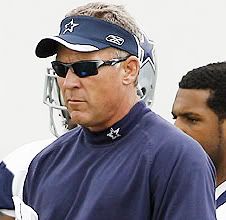
Wade Wilson, Cowboys quarterbacks coach will have five weeks off.


It was announced today that Dallas Cowboys quarterbacks coach Wade Wilson will be suspended for 5 games and fined $100,000 for possessing a banned substance.

In the wake of New England safety Rodney Harrisson admitting to using human growth hormone, it was discovered Wilson, who is a diabetic, had also acquired banned substances to help him deal with his diabetes.

So, taking a hard-line stance against banned substances, commissioner Roger Goodell and the NFL took action against Wilson as harshly as they could.

Did this strike anyone else as being incredibly off base? It's such an odd story. Why would the NFL penalize a coach for taking medicine that helps him deal with something as serious as diabetes? He's a coach, after all, and isn't playing or testing his physical mettle. HGH is a physical aid, not mental, and he was obviously taking it for a serious medical condition. He even admitted that he took it and made no excuses. He obviously wasn't trying to hide anything and was taking care of himself.
"If I was trying to hide something I wouldn’t have put it on a credit card. I had no idea this was illegal or against league policy."

It's a move that lacks common sense and represents the overzealous nature that Goddell has displayed thus far in his tenure as commissioner.

Normally I have no qualms in damning rule breakers to the consequences of their actions, but I make exception in this siutaiton. The NFL obviously has a lot of image and behavior problems, but punishing a diabetic 48-year-old quarterbacks coach isn't the way to clean it up.

Reasonably yours,
Scooter

E-mail us

Sunday, August 19, 2007

Stay focused or pay the consequences


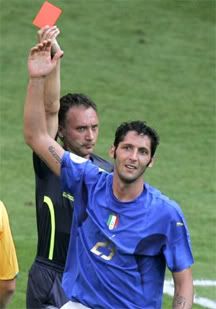
Hats off to you Mr. Materazzi.


With Italian soccer player Marco Materazzi finally disclosing exactly what it was he said to upset Zinedine Zidane so badly, it made me consider the nature of such actions and the repercussions of them.

Some incidents of a similar nature come to mind. Alex Rodriguez' yell when rounding third base against the Toronto Blue Jays, causing a dropped pop up was an act of distraction seen by many as unsportsmanlike. Robert Horry's clothesline of Steve Nash in the Western Conference Semifinals prompted Nash's teammates to leave the bench, thus earning them a suspension.

To varying degrees, these actions all come back to the same base concept of disrupting the other team in some fashion. One was more physical (Horry), another was merely immature insulting that incited action (Materazzi), while one was simple gamesmanship (A-Rod).

Fans get up in arms about these types of incidents since they interrupt a seeming balance of pure competition in the game by including more human interference than many fans are comfortable with. Most fans want to see a purer competition, one in which the participants play the game "the way it is supposed to be played" which basically means "the way each individual fan thinks it should be played."

Ultimately, a player can do whatever he chooses. In leagues and competitions that are driven by revenue, and with wins being one of the most impactful effects upon that revenue, players have choices to make. Is public perception more important to them, or is winning and succeeding and earning more money the priority? Some athletes choose to satisfy public perception while others choose the latter or find a middle ground between the two. There is absolutely nothing wrong with either one, and in a way, I respect the former more. If you can poke, prod, yell at or insult another team enough to get them out of concentration, make them angry enough with words to attack you or incite an action that is for the betterment of your team, you are dedicated to winning. You are devoted to your team, your fans and the ultimate outcome of that team. I respect that.

Additionally, if you are professional athlete and can't concentrate enough in the field to be distracted by another players actions, or if you don't have the mental fortitude to ignore an insult hurled your way, you deserve the repercussions of the lack of mental toughness you possess. Take some personal responsibility for once.

Despite the fact that some guys have done some despicable things in sports, when they are within the rules or for the betterment of your team, try to understand their motives. A-Rod's yelp may not have been classy, but it caused something positive for his team. Horry's attack on Nash was an unwarranted assault, but the ultimate outcome benefitted his team. Materazzi's insult may not have been the most reputable thing to do, but it got Zidane ejected. All of these guys won because of these things. They gained positivity for their respectice teams. Don't get angry just because it didn't seem like the sporting thing to do, get angry because the outcome of said events wasn't what you wanted personally.

Reasonably yours,
Scooter

E-mail us

Saturday, August 18, 2007

A community-selfish ownership move: Nothing wrong with that


It's coming.


Just as we thought might be the case, it is really looking like the Sonics will move to Oklahoma City.

With all that joy that Seattle fans had generated after drafting Kevin Durant, they have to be letting out a collective whimper. When a franchise decides to make a true youth movement and start from scratch, it can be one of the most exciting things that can happen for a fan base. Watching your young players grow and mature and gradually win more games as the develop, fans get a certain feeling of involvement with that team that just isn't the same as with teams that acquire most of their talent from free agency or through trades. The reward is so much greater when you get to watch your team blossom from scratch. That's why, subconsciously, this inevitable move is stinging the true Sonics fans out there in a major way.

What is most convincing about the potential of a move is that these Sonics owners are prepared to net a loss in moving the team to Oklahoma City. Aubrey McLendon, who the above article is about, said as much.
"But we didn’t buy the team to keep it in Seattle; we hoped to come here. We know it’s a little more difficult financially here in Oklahoma City, but we think it’s great for the community and if we could break even we’d be thrilled."

It's a strange thought on ownership that I honestly never considered. A rich man loves the area he lives in. The community, the area, everything about it. This is where him and his other rich friends want to spend money, work and live. By happenstance, a tragedy befalls another team's city and they temporarily reside in said rich guys' area. They know that due to the precarious political situation in the town the tragedy befell, they would likely not be afforded the opportunity to purchase that team. So, knowing the temporary team will eventually return to their old city, they seek out another team to purchase.

Clay Bennett saw his opportunity. The Sonics had been having some major problems in getting a new stadium built in Seattle for some time now. Seeing an opportunity to nab a franchise that could potentially move cities, Bennett and his compadres moved in. Their thoughts from the beginning were to move a team to Oklahoma City, that has become rather clear. Of course, they fed some public relations lines to the fans about wanting to stay in Seattle, and they will likely do that same until the move to Oklahoma is approved.

And good for them. Of course, the fans in Seattle are getting screwed pretty good by no control of their own. Unfortunately for them, it isn't their team. It's owned by the guys who purchase it. Sorry, that's how it works.

Now, the ownership group headed by Bennett will be able to move a professional sports team into their backyard, likely helping to pump money into their hometown economy and have a professional pet project to groom. Fortunately enough for them, their pet project is already looking like it has the makings of a thoroughbred.

Reasonably yours,
Scooter

E-mail us

Wednesday, August 8, 2007

Consider the "news' in "online news" lightly


Judge, jury, executioner.


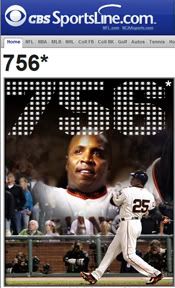
As Barry Bonds finally reached his ultimate goal (no, not a World Series title, dummy) it was time for all the sports information disseminators to finally put into action the dreaded endpoint to the saga of Bonds and his home run chase.

As the disseminators of sports information, these outlets have choices to make concerning how to present the information at hand. Do you take the role of objective third-party observer? Do you try to provide more perspective to your readers? Or do you make up their minds for them, approaching subjects as if you are the end-all-be-all of information?

Three out of the four main online sports information sites decided to choose the third option. CBS Sportsline, SI and Yahoo all decided to haul out the asterisk as the story. No dust had settled, the story was not presented for what it was. They skipped the information-providing step completely by jumping straight to question-of-validity mode. Is this wrong? It depends on your goal as an information provider.

Interestingly enough, ESPN is the fence sitter on this one. They provided the story straight up. Instead of asterisking it up like the other three, they decided to present the story as it happened: a baseball player broke a baseball record. One of the biggest head scratchers of the evening was how Yahoo treated it. You'll notice the link I provided earlier had no asterisk on it. The version earlier in the night was the exact same as the one you see from that image link except there was a big fat asterisk next to the "756". Having been a decision they likely discussed for some time before Bonds broke the record, it's really striking that they would decide to pull the asterisk after a short time. Cold feet?

Ultimately, the court of public opinion will decide the perception of Barry Bonds. Let the public think what they will, but don't get preachy with your news. Put it out there for people to know, provide some perspective and let them decide for themselves. Most people already believe Bonds' record is tainted, they don't need any help along the way.


Reasonably yours,
Scooter

E-mail us

Tuesday, July 31, 2007

Different approaches to ownership


One of these things is not like the other.


Would you rather have the best players on your team, or the most marketable ones?

It sounds like a stupid question, mostly because it is. Any fan worth their water doesn't give a crap what the general public thinks about the players on their team. As long as they are winning, that's all they care about.

It's an interesting question to ask, however, because many owners probably try and balance this in some way. When it all boils down, there are two worlds that sports owners live.

Revenue-driven owners look out solely for the bottom line.

Competition-driven owners want to win over all other things.

Although not mutually exclusive, the thought process for these two worlds is different. Owners like Mark Cuban and George Steinbrenner, despite their pitfalls, ultimately just want to win. It consumes them. They know that if they win, the money will come. And ultimately, they will spend whatever is within their power to get to that point. Losing kills them inside. They can't sleep, their stomachs hurt. Don't get me wrong, they want to make money, but they would never sacrifice the product they put on the field if it means some lost revenue.

Given, all owners would like their teams to win, but when you break it down to pure motives, most owners fall into one category or the other. Given, I have no problem with the revenue-driven owner. After all, it's usually the real reason anyone who has enough money to buy a professional sports team is rich in the first place. You want a return on your investment. And if that is your main prerogative, that's fine. I just think that owners who aren't passionate about their team's on-field or on-court success don't care about or realize that their earning potential is exponentially higher when the team is successful.

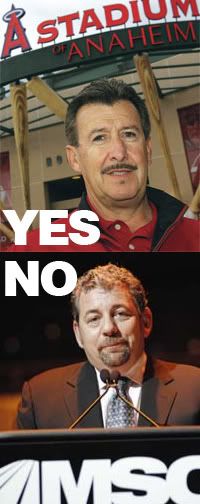
Take the Los Angeles Angels for instance. Their owner, Arte Moreno, realizes that spening money on salary and putting the right players on the field will make his team successfull (obviously). He has also taken steps to cater to the fans by renaming the ballpark to a non-corporate name (branding for the Angels), and lowering beer prices. He takes the fans into consideration and watches his bottom line in the process. It's really a brilliant, not-so-crazy concept that somehow doesn't catch on.

Given, team situations are different. But there are teams that have the opportunity to create an atmosphere of winning that fans love to be around. The Angels built themselves up the right way. Many do not.

My point in all of this rambling is that there are owners like Moreno who consider success primary among the concerns of fans, and sprinkling it with some other incentives helps. Then, there are those who are fine with rolling out a mediocre-to-bad product just because they'll continue to make acceptable profits. Instead of producing a winner, they cover the team with unhealthy toppings instead of building the actual product. New York Knicks owner James Dolan is obviously fine with doing this every season. Because of television contracts and the city they play in, the Knicks will probably always sit atop the revenue hill among NBA teams. What Dolan needs to finally acknowledge, is that rebuilding would ultimately earn him even more money in the long term. Owning a sports franchise is about long-term revenue performance, right? Instead, he keeps pulling in players who he feels the city of New York will embrace...Stephon Marbury and Larry Brown's acquisitions being the biggest offenses among them all. Of course, Brown didn't last. But the Knicks still have Marbury, a New York guy who the fans supposedly like having. But, going back to my initial question...which would fans rather like? A well-built team that can compete, or a team with guys they like personally? I'm imagining they choose the former every time.

Reasonably yours,
Scooter

E-mail us